
Carbon Dioxide Monitors
Carbon dioxide monitors measure CO2 concentration to support occupant safety, process control, and ventilation verification across industrial and commercial spaces. Typical solutions include wall or duct-mounted transmitters for continuous tracking, fixed detectors for mechanical rooms and enclosed areas, and portable instruments for troubleshooting and commissioning. Most CO2 monitoring uses non-dispersive infrared (NDIR) sensing, selected for stable response and strong selectivity to CO2 compared with many common vapors.
Outputs commonly include 4 to 20 mA, 0 to 10 V, relays, Modbus, BACnet, or Ethernet gateways for integration with building automation, PLCs, and data historians. Well-specified monitors help teams validate outdoor air delivery, detect CO2 buildup in confined or occupied zones, and document measurement performance using defensible calibration and verification practices.
Technical definition: what CO2 monitors measure and why it matters operationally
Carbon dioxide monitors are instruments that quantify CO2 in air and convert that measurement into control signals, alarms, and time-stamped records. CO2 is not only a ventilation indicator, it can become an asphyxiation hazard in poorly ventilated or confined locations, especially where CO2 is stored or generated. Engineering teams specify monitors
based on range, accuracy, response time, stability, and environmental limits so readings can be used for ventilation control, safety procedures, and compliance documentation.
Product types used for CO2 monitoring architectures
Wall-mount and room CO2 transmitters
Installed in occupied or semi-occupied zones to trend concentration and drive demand- controlled ventilation or alert thresholds.
Duct-mounted CO2 sensors and transmitters
Used to evaluate air handling performance, outdoor air delivery, and return-air concentration for ventilation verification and commissioning.
Industrial fixed CO2 detectors
Deployed near credible accumulation or release points such as beverage CO2 storage, dry ice handling areas, and mechanical rooms.
Portable CO2 monitors and survey instruments
Used for commissioning, troubleshooting ventilation complaints, and checking enclosed spaces prior to work.
CO2 controllers, annunciators, and communications gateways
Aggregate readings, apply alarm logic, and integrate outputs into BAS, PLC, SCADA, or centralized monitoring platforms.
Sensor technologies used for CO2 detection
NDIR CO2 sensors
Most common approach for CO2 measurement, using infrared absorption to quantify concentration with good selectivity.
Photoacoustic CO2 sensors (assumption-based)
Used in certain applications where compact designs or specific performance targets are required. Assumption: the application justifies this method and vendor support is available.
Dual-channel or reference-compensated optics
Applied to improve stability by correcting for lamp aging, contamination, or optical drift.
Enviro Testers has quickly established itself as a trusted leader in delivering advanced instrumentation for air, soil, and water measurement programs. With a growing B2B presence across North America, we lead in technology innovation, product reliability, and customer-focused support. Through research, continuous product development, a strict
quality assurance process, and expert guidance, we help businesses streamline operations and unlock the full potential of testing and measurement solutions.
Measurement performance features that affect engineering decisions
Range selection tied to use case
Ventilation control often uses lower ranges optimized for occupied spaces, while industrial safety scenarios may require higher ranges to capture elevated concentrations without saturating.
Response time and sampling design
Room sensors, duct sensors, and industrial detectors differ in airflow conditions. Sensor inlet design and filtering influence time-to-alarm and trend fidelity during rapid changes.
Stability and drift controls for long-term trending
Ventilation verification depends on repeatable readings over months. Stability features can include reference channels, temperature compensation, and controlled optical path designs.
Environmental tolerance
Humidity, temperature swings, dust, and aerosols can affect sensor optics and electronics. Correct enclosure selection and filtration reduce nuisance behavior and maintenance burden.
Integration options for controls, facilities, and OT networks
Industrial and building automation outputs
CO2 monitors are often selected by interface requirements, including:
- 4 to 20 mA for PLC analog inputs and historian trending
- 0 to 10 V for BAS analog control loops
- Relay outputs for alarms, fan enable, or damper actuation
- Modbus RTU/TCP for multi-drop networks and supervisory dashboards
- BACnet (assumption-based) for direct BAS integration where required
Alarm and control logic configurations
Configuration options commonly include:
- Multiple setpoints for advisory, action, and high-level alarms
- Time delays and averaging windows for ventilation control stability
- Latching non-latching alarm behavior aligned to site procedures
- Fault supervision for sensor failure, power loss, or out-of-range conditions
Data logging and audit trails
Many facilities require time-stamped event logs for investigations and commissioning reports. Centralized controllers or gateways can support record retention aligned to internal governance.
Deployment configurations that reduce commissioning friction
Placement guidance for representative readings
Room monitors perform best when mounted away from supply registers, doors, and direct drafts that can bias readings. Duct sensors require correct probe placement and consideration of stratification.
Remote sampling and tubing options (assumption-based)
Remote sampling can be used for enclosed cabinets or hard-to-access areas, with attention to transport delay and condensation risk. Assumption: the environment supports tubing maintenance and verified flow.
Industrial enclosures and mounting approaches
Mechanical rooms and loading areas often need robust housings and clear service access for verification tasks.
Calibration and verification practices that engineers can defend
Field calibration workflows
Calibration methods may include span gas checks with certified CO2 mixtures, plus zero verification where appropriate. Maintenance teams typically define intervals based on criticality, environment, and risk.
Automatic baseline correction considerations (assumption-based)
Some NDIR sensors use baseline correction algorithms intended for spaces that regularly return to outdoor baseline levels. Assumption: the monitored area actually reaches baseline periodically; otherwise, manual calibration strategies may be better.
Diagnostics and maintenance indicators
Useful indicators include optical contamination warnings, sensor health flags, and drift tracking to plan service before readings become unreliable.
- Beverage bottling plants monitor CO2 near bulk tanks to reduce accumulation risk during transfers and line maintenance.
- Breweries track CO2 in fermentation zones to protect workers during high off- gassing and limited ventilation.
- Dry ice production and handling areas monitor buildup to support safe entry procedures and ventilation verification.
- Cold rooms using CO2 refrigeration monitor machinery spaces to trigger alarms and validate exhaust performance.
- Distribution centers monitor enclosed charging rooms where ventilation performance must be verified during peak operations.
- Wastewater facilities monitor confined zones to reduce asphyxiation risk when CO2 is used for pH control.
- Greenhouses monitor CO2 enrichment to maintain crop targets while preventing unsafe concentrations in occupied aisles.
- Laboratories monitor CO2 incubator rooms to verify ventilation and reduce exposure during cylinder changeouts.
- Parking garages and enclosed loading docks trend CO2 to support ventilation control and occupant comfort targets.
- Data centers monitor CO2 as a ventilation indicator in occupied support zones and during air handling changes.
- Hospitals and clinics trend CO2 in waiting areas to validate outdoor air delivery and manage complaint-driven investigations.
Schools and higher education facilities monitor CO2 to document ventilation performance during seasonal HVAC mode changes.
- OSHA 29 CFR 146 Permit-Required Confined Spaces
- OSHA 29 CFR 1000 Air Contaminants
- OSHA 29 CFR 1200 Hazard Communication
- OSHA 29 CFR 147 Control of Hazardous Energy (Lockout/Tagout)
- ANSI/ASSP 1 Confined Spaces
- NFPA 70 National Electrical Code (NEC)
- NFPA 72 National Fire Alarm and Signaling Code
- ASHRAE 1 Ventilation for Acceptable Indoor Air Quality
- ASHRAE 170 Ventilation of Health Care Facilities
- International Mechanical Code (IMC) ventilation provisions (jurisdiction-dependent)
- UL certifications applicable to CO2 monitoring equipment (model-dependent)
- CSA certifications applicable to CO2 monitoring equipment (model-dependent)
- WHMIS requirements for hazardous products in Canada
- CCOHS exposure references for carbon dioxide
- Provincial OHS regulations in Canada (jurisdiction-dependent)
- Canadian electrical code requirements for hazardous or special locations (site- dependent)
CO2 selectivity that supports reliable control and investigation workflows
NDIR sensing provides strong selectivity to CO2 compared with many industrial vapors, supporting stable ventilation control loops and reducing false positives in mixed-chemical environments. Enviro Testers emphasizes sensor selection aligned to the actual use case, whether the goal is indoor air trend fidelity, accumulation hazard detection, or process enrichment control.
Measurement stability that improves long-term trending
Ventilation verification and commissioning rely on repeatable measurements over time. Differentiators that matter include:
- Reference-compensated optics that reduce drift from component aging
- Temperature compensation suited to mechanical rooms and duct environments
- Filtering and inlet designs that reduce dust-driven optical contamination
- Drift tracking that supports proactive maintenance planning
Integration-ready options for BAS and industrial control systems
CO2 monitoring rarely stands alone. Engineering teams typically require predictable scaling and clear fault behavior:
- 4 to 20 mA and 0 to 10 V outputs with documented scaling
- Modbus connectivity for multi-point monitoring and centralized dashboards
- Relay outputs for alarms, fan enable, or damper actuation
- Controller event logs that support commissioning reports and incident review
Deployment guidance based on real commissioning problems
Sensor placement and airflow effects often drive poor results, not the sensor itself. Enviro Testers supports deployments with practical guidance on:
- Avoiding biased readings from supply air drafts and short-circuiting
- Duct probe placement and stratification considerations
- Alarm setpoint selection aligned to occupancy patterns and room use
- Verification checks that confirm sensors respond as expected after installation
Lower lifecycle cost through maintainability and standardization
Procurement and maintenance teams benefit when calibration workflows are predictable and spares are easy to stock. Enviro Testers supports standardization strategies across sites, with accessories, documentation, and service plans aligned to operational criticality and audit expectations.
Facilities teams often need help selecting CO2 monitoring ranges, deciding between room and duct measurement points, and integrating signals into BAS or PLC architectures without creating nuisance alarms. Connect with Enviro Testers through our Contact Us page to request product information, technical consultation, integration guidance, procurement support, or help building calibration and verification workflows.
Showing 1–16 of 174 results
-

3 in 1 Indoor Air Quality Monitor with CO2, Temperature Humidity – Enviro Testers
Product successfully added to the Quote List
-

Air Quality Detector with IoT Digitalization CO2 Sensor – Enviro Testers
Product successfully added to the Quote List
-
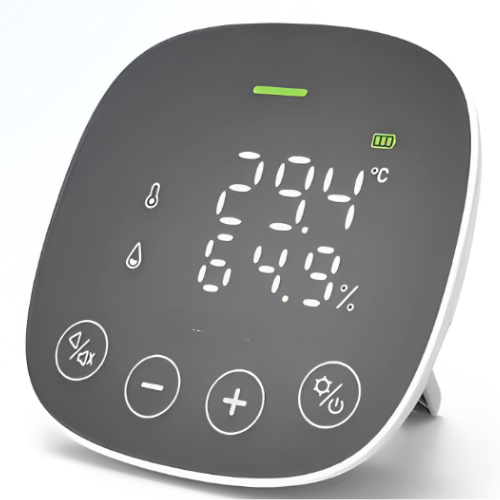
CO2 Detector with Zigbee ABC Calibration Real Time Alarms – Enviro Testers
Product successfully added to the Quote List
-
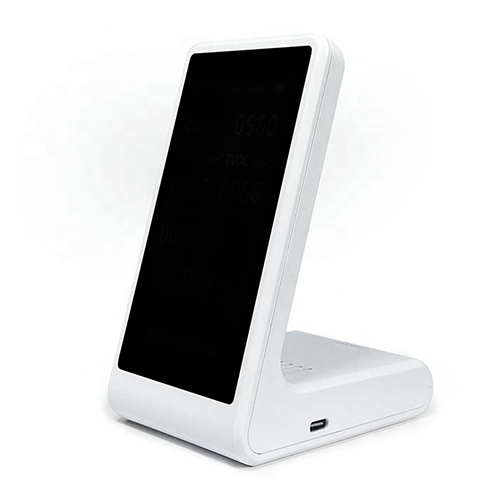
Desktop CO2 Detector with LCD Display and 400–2000 ppm Range – Enviro Testers
Product successfully added to the Quote List
-
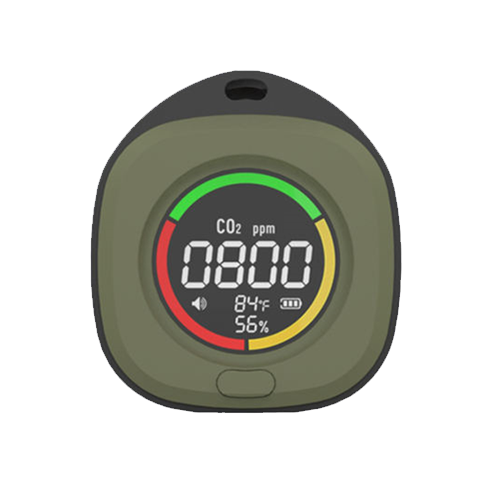
Digital CO₂ Gas Analyzer with PPM Sensor for Industrial Household Use – Enviro Testers
Product successfully added to the Quote List
-

Digital Infrared CO2 and Oxygen O2 2 in 1 Gas Detector – Enviro Testers
Product successfully added to the Quote List
-
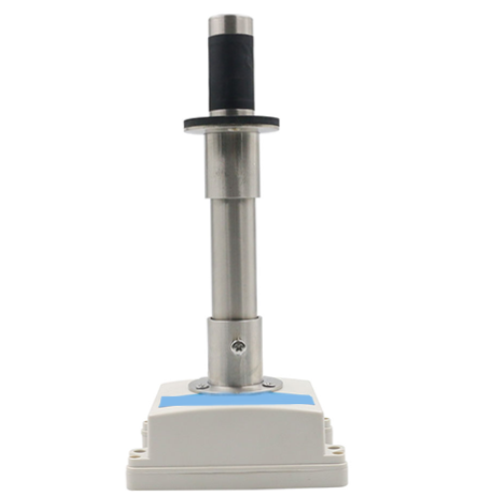
Duct Mounted Environmental CO₂ Gas Transmitter Probe (Analog/RS485 Output) – Enviro Testers
Product successfully added to the Quote List
-
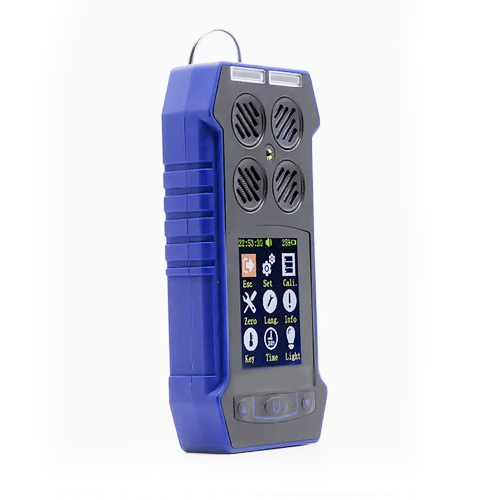
Enviro Testers 4-in-1 Gas Detector
Product successfully added to the Quote List
-
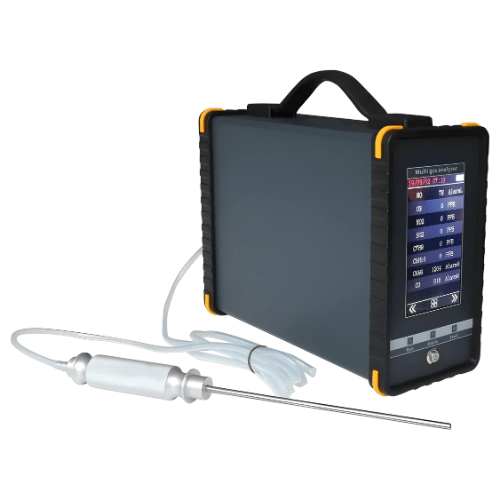
Enviro Testers 4in1 Multi Gas Detector
Product successfully added to the Quote List
-

Enviro Testers 6in1 Multi-Gas Detector
Product successfully added to the Quote List
-
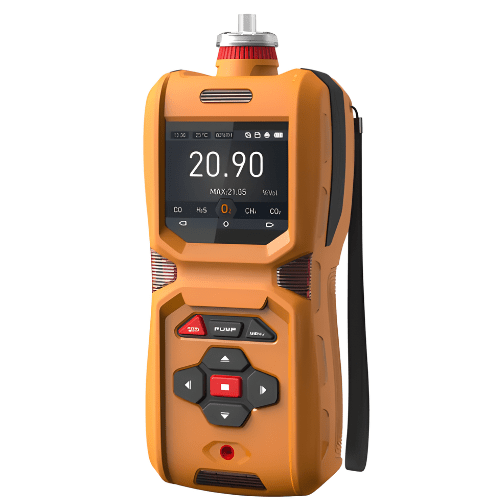
Enviro Testers Alarm CO2 Detector
Product successfully added to the Quote List
-
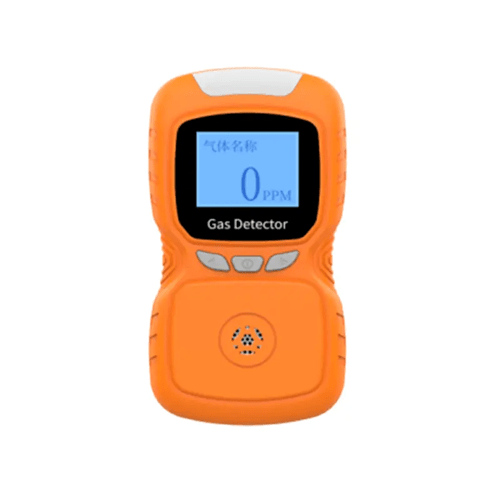
Enviro Testers Alarm Gas Analyzer
Product successfully added to the Quote List
-

Enviro Testers Alarm Gas Detector
Product successfully added to the Quote List
-

Enviro Testers Automatic CO2 Gas Analyzer
Product successfully added to the Quote List
-
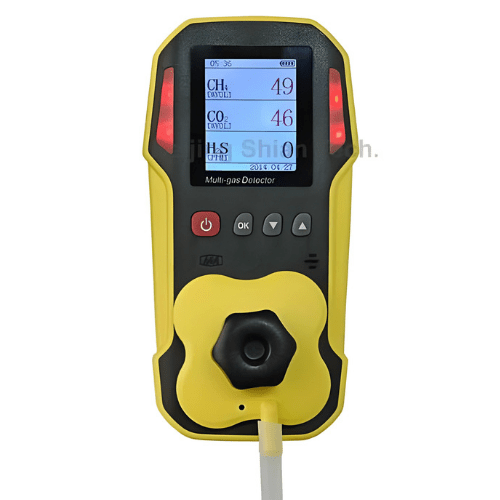
Enviro Testers Biogas Analyzer
Product successfully added to the Quote List
-

Enviro Testers Carbon Dioxide Alarm Detector
Product successfully added to the Quote List